If
you're familiar with the Calvinist system, you're aware of the fact that there
are five points laid out by the system as a convenient way to describe what God
and man's roles in salvation are. The
well-known acrostic TULIP, describes the primary points that the system seeks
to identify. T stands for total depravity, the idea that man is dead in sin
(Ephesians 2:1) and that he needs God to quicken him (Ephesians 2:5) in order
to respond and be saved. U stands for unconditional election. Since man is dead
in sin, God has selected those whom He will to save from the mass of sinners in
the world. L is for limited atonement. God, having chosen those whom He wills
to save, has provided a way for them to be so saved through Christ. I is for irresistible
grace. Again, since man is dead in sin, it is God who has to draw man to
Himself. Man cannot do so of his own accord. And P is for perseverance of the
saints. It is here that we have the one point to which the title of this
article refers.
Saturday, January 5, 2019
Saturday, December 15, 2018
Agonize!
No
doubt one of the mantras of our age is the refrain that to become a Christian
is easy and, furthermore, you need only receive Christ and all your worries
will be a thing of the past. “Let Jesus into your heart” the preacher will tell
us, “and He will give you peace and joy and you’ll never have to worry about anything
anymore.” To be sure, the idea that becoming a Christian will solve all your problems,
cure all your ailments and make right whatever is wrong in your life is not
new. But it seems it has never been as prevalent as it is today. The so-called “prosperity
gospel” is perhaps the greatest purveyor of such silliness. Alas, it is not
surprising in a generation that is desperately trying to find meaning while at
the same time spurning the God who alone can give it to them.
Saturday, December 1, 2018
The Perfect Choice, part 3
Last
time we discussed the importance of a proper hermeneutical and exegetical
approach when we study any passage of scripture. We did so in connection with the
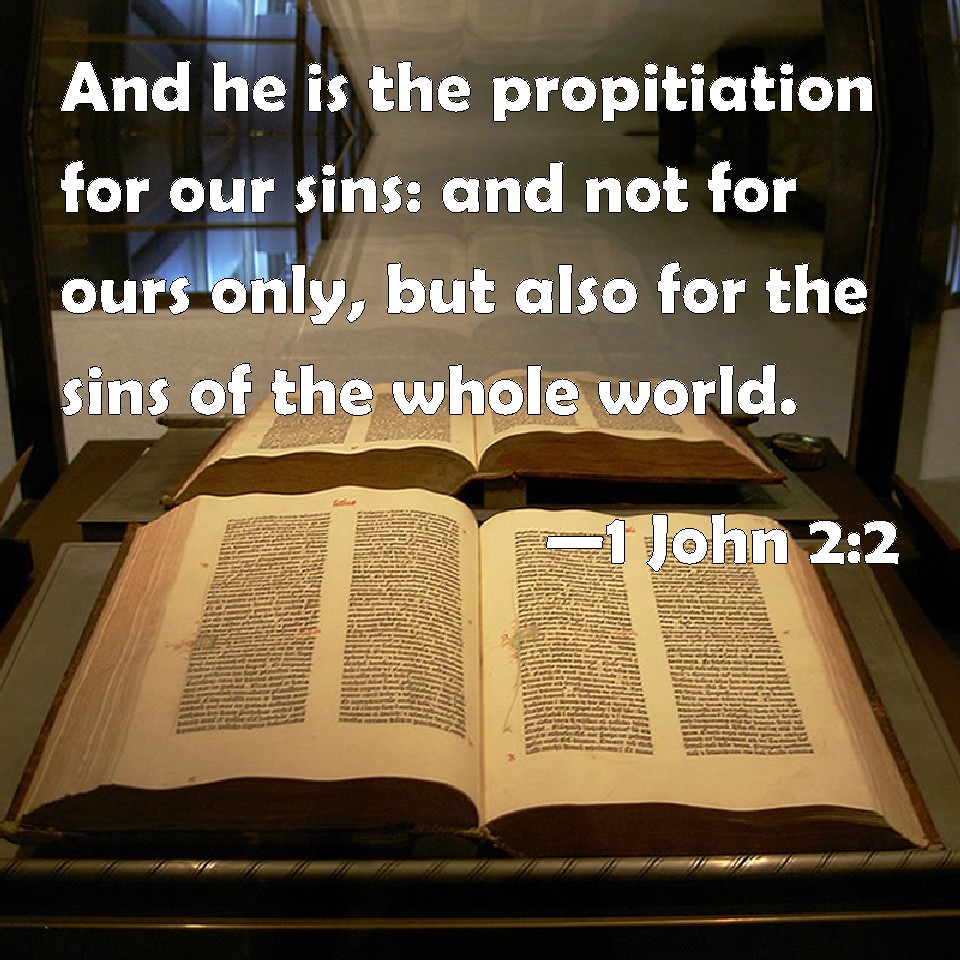
contention of many that 1 John 2:2 demonstrates that the atonement was carried
out for the entire world, every single person without exception, rather than
being limited to those whom God had chosen for salvation. This time we want to
get into the specifics of the particular passage and determine whether this
passage does indeed, teach what many would have us believe.
Subscribe to:
Posts (Atom)